


The aroma of spices hitting hot oil, the gentle simmer of curry thickening to perfection, and the satisfying sizzle of vegetables being tossed—these are moments that define everyday cooking in many homes. Behind every flavorful dish lies the right cookware, and few utensils are as essential in Indian kitchens as the kadai. Designed for deep frying, sautéing, slow cooking, and simmering, a well-crafted kadai can completely transform the cooking experience. Among the many options available, a heavy-bottom kadai stands out for its ability to distribute heat evenly and deliver consistent results.
Why Even Heat Distribution Matters
Uneven heat is one of the most common challenges in cooking. Thin cookware often develops hotspots, causing food to burn in some areas while remaining undercooked in others. A heavy-bottom kadai solves this issue by spreading heat uniformly across its base. The thick bottom absorbs and distributes heat gradually, preventing sudden temperature spikes.
This feature is especially important when preparing dishes like curries, gravies, stir-fried vegetables, or deep-fried snacks. Consistent heat ensures that spices cook evenly, onions caramelize properly, and ingredients blend harmoniously without scorching.
The Role of Material in Performance
The performance of a kadai largely depends on the material used. Hardened anodised aluminum has become a preferred choice because it is durable, lightweight, and highly efficient at conducting heat. When combined with a non-stick coating, it offers the perfect balance of convenience and performance.
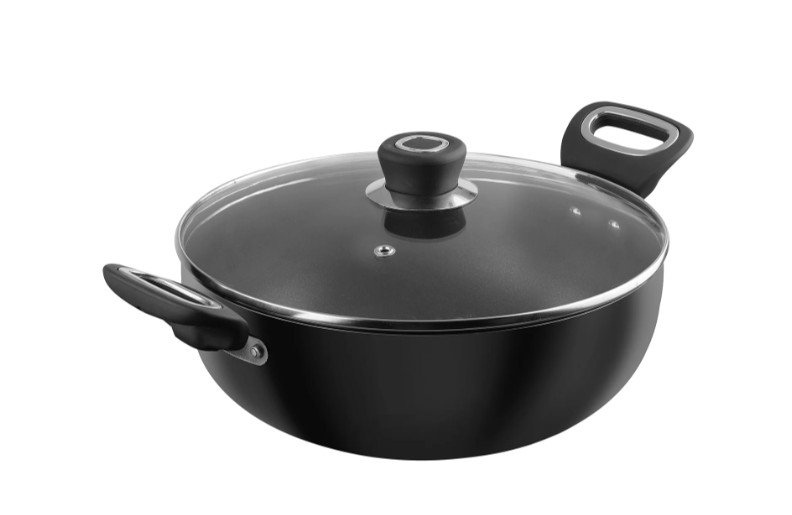
The Vinod Hanos Non-Stick Kadai (Induction Friendly) by Vinod Cookware India Pvt. Ltd. is a strong example of modern innovation in traditional cookware. Made from hard anodised aluminum and enhanced with a non-stick coating, this kadai is designed to handle daily cooking with ease. Its induction-friendly base ensures compatibility with both gas and induction stovetops, adding versatility to any kitchen setup.
Benefits of a Heavy Bottom Kadai
1. Uniform Cooking Results
A thick base ensures that heat spreads evenly, reducing the risk of burnt patches. This is particularly helpful when slow-cooking dals or preparing rich gravies that require patience and steady heat.
2. Reduced Oil Usage
With a non-stick surface, food releases easily from the surface. This means less oil is required, promoting healthier cooking without compromising flavor.
3. Better Temperature Control
A heavy bottom kadai retains heat longer, allowing you to lower the flame once the desired temperature is reached. This helps save energy and prevents overcooking.
4. Durability
Hard anodised cookware is more resistant to scratches and corrosion than standard aluminum. It maintains its shape and structure even after prolonged use.
Induction-Friendly Convenience
Modern kitchens are evolving, and many households now use induction cooktops alongside traditional gas stoves. Choosing induction-compatible cookware eliminates the need for multiple sets of utensils. An induction-friendly kadai like the Vinod Hanos Non Stick Kadai offers seamless performance on various heat sources.
The strong magnetic base ensures quick heating on induction surfaces, further enhancing energy efficiency. Faster heating means less cooking time and lower energy consumption.
Comparing Kadai and Dosa Tawa
While a kadai is essential for deep cooking and frying, a dosa tawa plays a different yet equally important role in the kitchen. The dosa tawa price often varies based on size, thickness, and material quality. Just like a heavy bottom kadai, a thick dosa tawa ensures even heat distribution for perfectly crisp dosas without uneven browning.
When evaluating dosa tawa price options, it’s wise to consider the base thickness and material. Investing slightly more in a high-quality, heavy-base tawa often results in better durability and improved cooking performance. Just as with a kadai, thickness and heat retention significantly impact the final outcome.
Product Spotlight: Vinod Hanos Non Stick Kadai
The Vinod Hanos Non Stick Kadai (Induction Friendly) has recently seen strong demand, with 12 units sold in the last 35 hours. Its popularity reflects growing consumer interest in durable and efficient cookware.
Key highlights include:
- Hard anodised aluminum construction
- Non-stick coating for easy cooking and cleaning
- Induction-friendly base
- Strong and long-lasting design
Originally priced at ₹1,760.00, it is currently available at ₹1,598.00, offering value for money considering its build quality and performance features. For home cooks who want durability combined with convenience, this kadai provides a reliable solution.
Energy Efficiency and Cost Savings
A heavy-bottom kadai doesn’t just improve cooking results—it also contributes to long-term savings. Even heat distribution reduces cooking time and prevents food waste caused by burning. Additionally, the ability to cook at lower flame settings once the pan is heated helps conserve gas or electricity.
Over time, investing in quality cookware can be more economical than repeatedly replacing thinner, low-cost alternatives that wear out quickly.
Maintenance Tips for Longevity
To maintain the performance of a non-stick kadai:
- Avoid using metal utensils that may damage the coating.
- Clean with a soft sponge and mild detergent.
- Do not overheat the pan when empty.
- Store carefully to prevent surface scratches.
Proper care ensures that the kadai retains its non-stick properties and continues delivering even heat distribution for years.
Choosing the Right Size
Selecting the correct size depends on family size and cooking frequency. Smaller households may prefer compact models for daily use, while larger families benefit from bigger capacities for bulk cooking. A well-sized kadai prevents overcrowding of ingredients, allowing better heat circulation and improved cooking results.
Final Thoughts
A heavy bottom kadai is more than just another kitchen utensil—it is a foundation for consistent, flavorful cooking. Even heat distribution, durability, and compatibility with modern stovetops make it an essential tool in every home. Whether preparing festive meals or everyday dishes, investing in a high-quality kadai ensures reliable performance and long-term value.
Similarly, evaluating factors like thickness and durability when considering dosa tawa price options can enhance overall cooking efficiency. Quality cookware is not merely an expense; it is a practical investment that elevates both taste and technique.
